Prof. Jeffrey Lefstin helps students find their path in intellectual property law
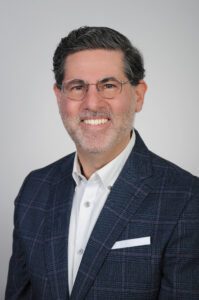
Professor Jeffrey Lefstin says one of the joys of teaching is watching students experience the moment when a difficult legal concept suddenly clicks.
- Professor Jeffrey Lefstin has taught at UC Law SF since 2003, helping generations of students develop their understanding of intellectual property law.
- His scholarship on the history and development of patent law has influenced federal courts, the U.S. Patent and Trademark Office and Congress.
- He developed the popular Statutory Intellectual Property course and co-created UC Law SF’s summer International IP Transactions program in Germany.
For more than two decades, Professor Jeffrey Lefstin has given shape to intellectual property education at UC Law San Francisco. He joined the faculty in 2003 after clerking at the U.S. Court of Appeals for the Federal Circuit. Since then, he has developed and taught courses in patent and IP law, along with courses on legal analysis and contracts. He also co-created UC Law SF’s summer International IP Transactions program with Bucerius Law School in Hamburg, Germany.
Before becoming a lawyer, Lefstin earned a Ph.D. in biochemistry and worked as a molecular biologist. His scholarship explores the history and development of patent law, including how courts define the boundaries of patent-eligible inventions. His work has been cited by federal courts. He has testified before the U.S. Patent and Trademark Office and Congress, and he received the California Lawyers Association’s 2026 Vanguard Award for his contributions to intellectual property scholarship and public policy.
As a teacher, he has helped students discover an interest in IP law and, for some, chart a path toward careers in the field. Former students describe him as thoughtful, approachable and deeply invested in their success.
Below, Lefstin shares what he finds most rewarding about teaching, why he has stayed at UC Law SF for more than 20 years, and how his students continue to inspire his work.
What do you like most about teaching law students?
When I teach the law, especially in the first year, I’m ushering students into a whole new world — not just the doctrine, but the language, history, tradition, and ways of thinking about our legal system and our society. It’s a joy to guide them along that path.
Sometimes I don’t even know when it’s happening in the classroom. In Contracts, I teach a famous case where Justice Traynor extended the doctrine of promissory estoppel to make some offers irrevocable. It’s always seemed a bit of an obscure doctrine to me, but I’ve had several students tell me that it was an almost magical moment, where they finally understood how legal doctrine develops.
What makes UC Law SF a special place, and what’s kept you teaching here for decades?
The diversity and resilience of our students. They come here with so many different stories, so many different challenges, and so many different ambitions. Learning their stories, helping them overcome their challenges, and helping them realize their ambitions never gets old.
What contributions have made your time at UC Law SF especially meaningful?
I was the last faculty member to serve as associate academic dean (2016 to 2019) before the dean of students was established as a professional staff position here. In that role, I worked closely with many dedicated staff members and learned how committed they are to student success. It was exceptionally rewarding to help students through their personal and academic challenges. There’s nothing like seeing a student cross the stage at Commencement knowing you played some small role in helping them make it there.
My scholarship on the origins and development of the doctrine of patent-eligible subject matter has been another significant contribution. Nineteenth-century patent law may sound like an obscure focus, but my work has literally rewritten the history of patent law’s most fundamental doctrines, and has drawn the attention of the federal courts, the U.S. Patent & Trademark Office, and the U.S. Senate’s Subcommittee on Intellectual Property as it focuses on patent reform.
I have especially enjoyed helping to build out the intellectual property curriculum at UC Law SF. I developed and continue to teach the Statutory Intellectual Property course. It remains one of the most popular first-year elective courses, giving students a chance to study IP at the start of their law school careers. That’s more important than ever with the current law firm hiring cycle! And along with my colleague Dana Beldiman, I created our unique summer program in International IP transactions, which we offer in conjunction with Bucerius Law School — Germany’s top law school. Taught at the Bucerius campus in Hamburg, Germany, this program gives UC Law students the chance to explore the role IP plays in the global economy, as well as network with students and young professionals from around the world.
How has donor support made a difference in your work?
Donor support has been instrumental in attracting and retaining my best students. I primarily teach first-year students, and merit-based scholarships give those who are most engaged and successful an important incentive to continue their education at UC Law SF after their first year.
Alumni reflect on Lefstin’s influence
“Professor Lefstin is one of the most influential professors I had at UC Law SF. I took both 1L Contracts and upper-division Patent Law with him, and his teaching helped spark my interest in patent law, which ultimately became my career. He was consistently thoughtful, approachable, and deeply invested in his students’ success, whether patiently answering questions in office hours, engaging with overly complicated classroom hypotheticals, or offering guidance outside of class. His mentorship extended beyond the classroom, including through programs such as the international IP program in Germany and the informal career and academic guidance he provided to many students. Since graduating, I have been fortunate to stay in touch with him, and he has remained a valuable connection to both developments in patent law and the law school community.”
— Matthew Avery ‘09, partner, Baker Botts
“I had the privilege of being Professor Lefstin’s student in all possible settings (as a Zoom student, in a small seminar, in a study abroad program, and as a pupil when he advised me on a Note I wrote). In each case, he showed an enthusiasm for student success combined with an emphasis on teaching students the thorough, logical thinking required to succeed as an attorney. He also helps students succeed beyond law school: he graciously recommended me for a clerkship in Washington, D.C., and mentored me as I prepared to work for a judge. Finally, through his amicus brief writing, many authored articles, and discussions with members of Congress, Professor Lefstin ensures that intellectual property law lives up to its ideals as written in the U.S. Constitution. I am grateful for his mentorship and guidance, and I hope many more students can benefit from his love of teaching and his desire to see students succeed.”
— Philip E. Hawkyard ’23, associate, Alston & Bird
Decades in the Making highlights the contributions of faculty members who have spent 20 or more years at UC Law SF, recognizing their enduring impact on students’ lives and careers.