3L Juan Herrera Hones Legal and Advocacy Skills in the In-House Immigrants’ Rights Clinic
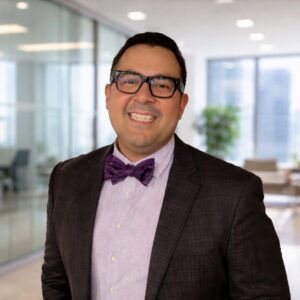
3L Juan Herrera worked directly with clients seeking release from immigration detention, turning complex legal challenges into real-world lessons in advocacy and lawyering.
3L student Juan Herrera reflects on his work in the In-House track of the Immigrants’ Rights Clinic, where he helped clients gain freedom from immigration detention while building essential lawyering skills.
- Worked closely with clients and their families, learning to build trust and support them through complex cases.
- Drafted motions and assisted with habeas petitions, gaining hands-on experience in legal research, writing, and advocacy.
- Learned courtroom strategy and case management alongside faculty, developing skills essential to becoming an effective trial lawyer.
3L Juan Herrera:
Working with the In-House Track of the Immigrants’ Rights Clinic last fall, I interviewed new clients, compiled and investigated data, coordinated logistics for hearings, and assisted in drafting motions and habeas petitions. As our caseload increased, I refined my questioning techniques and learned the best ways to build trust with clients, witnesses, and family members—relationships that became the foundation of the clinic’s early successes.
Witnessing our first client come home after being freed from ICE detention was the highlight of law school. He had been unlawfully detained and fast-tracked for deportation, but the clinic’s efforts ensured he returned to his family. Interacting with the client’s family post-release is a memory I will carry long after graduation. The ability to help clients assert their legal rights is full circle for me: having been a child farm laborer raised in the Central Valley, I now use my legal training to assist people who deserve fair and just treatment.
Our clients were men and women, young and old, speaking English, Spanish, and indigenous languages. Most had open asylum cases and had been living normal lives when ICE detained them—often on their way to work. In one case, a mother lost her son, husband, and brother-in-law after immigration officers stopped their car for a window-tinting violation. She had two younger sons, born in the United States, who endured the trauma of having family members detained. Many clients have lived in the U.S. for years, are deeply integrated into their communities, and contribute meaningfully—sometimes with spotless records and lives built on work and family.
I also had the opportunity to observe Professors Jonathan Abel and Richard Boswell operate in court. Being in the courtroom taught me how to read and interact with opposing counsel, when to be assertive, and how composure can shape outcomes. Professor Abel’s calm, respectful, and pointed approach gave me a new perspective on the courtroom—different from what I had experienced in internships—and helped me envision the trial attorney I want to become.
Visiting clients in detention was eye-opening. I went to the Golden State Annex in the Central Valley town of McFarland, north of Bakersfield, navigating exhaustive ICE registration and pre-screening processes to meet a client who described conditions and violence inside the facility. Helping secure his release was deeply rewarding. The clinic’s work last semester freed six individuals from ICE detention, a meaningful success, though resources are limited for the thousands still at risk of deportation.
Beyond finding the clinic’s work rewarding, it also helped me hone my professional skills. I learned to gather and analyze data, draft motions, navigate the Department of Homeland Security system, and advocate effectively in court. Working alongside passionate and talented students and professors was an added benefit.
I recommend any clinic at UC Law SF, but the Immigrants’ Rights Clinic is especially valuable if you want to work with multiple clients, navigate federal agencies and courts, draft motions, conduct interviews, and build real-world advocacy skills. I am a better law student—and a better person—because of this experience.
The Evidence of Success series highlights UC Law SF students as they share how the College’s opportunities equip them with the experience, skills, and confidence to excel in the legal profession.