Randy Shaw ’82 Reflects on Tenderloin Neighborhood’s Past, Present, and Future
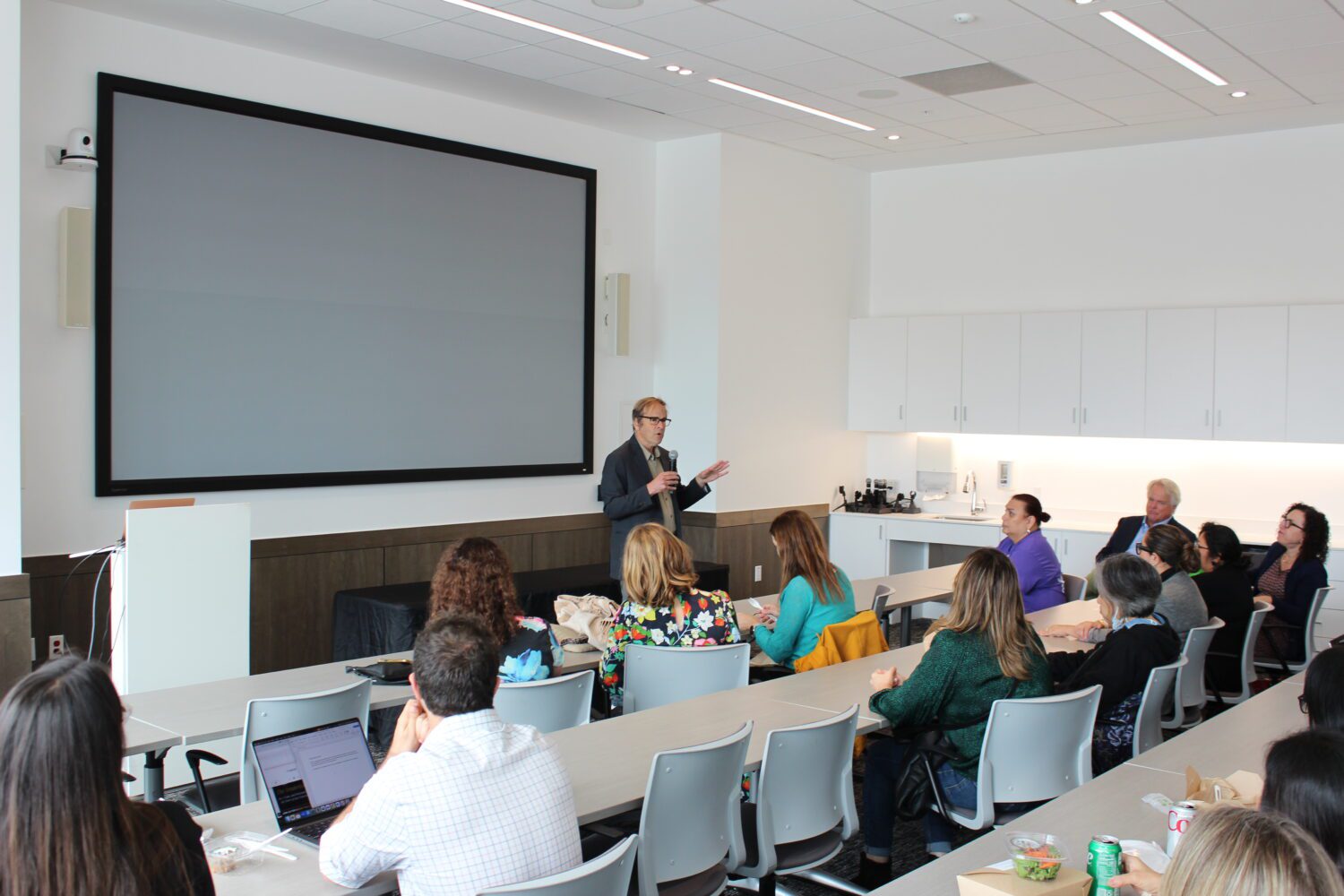
Randy Shaw ’82 discusses how he drew on his legal education to defend tenants’ rights, preserve affordable housing, and strengthen the Tenderloin community — efforts at the heart of his updated book on the neighborhood’s history and resilience.
- UC Law SF alum Randy Shaw ’82 chronicles the Tenderloin’s rich history with its recurring themes of resilience and activism — in his newly updated book.
- He founded the Tenderloin Housing Clinic while at UC Law SF to help tenants facing eviction and unsafe housing.
- Shaw’s advocacy has helped the Tenderloin gain recognition as a national historic district and preserve its affordable housing and working-class identity.
For Randy Shaw ’82, the Tenderloin isn’t just a neighborhood. It’s a community with historical significance and cultural richness — one that he has championed for more than 40 years.
As a UC Law SF student, Shaw founded the Tenderloin Housing Clinic in 1980 to provide legal advice to tenants facing eviction and housing issues. He’s been advocating for the Tenderloin ever since — through legal action, policy work, historic preservation, and storytelling.
In October, Shaw returned to his alma mater to discuss the newly released second edition of his book, “The Tenderloin: Sex, Crime, and Resistance in the Heart of San Francisco.” His talk traced the neighborhood’s evolution — from a center of vice to a haven for marginalized communities and a battleground for housing justice.
He recounted how the neighborhood rose from the ashes of the 1906 earthquake to become a bustling center of nightlife with a thriving underground economy.
“We were the gambling hub of the Bay Area,” he said.
Shaw describes how advocacy and community organizing helped preserve affordability and secure safer housing conditions for Tenderloin residents.
The name “Tenderloin,” Shaw explained, was borrowed from New York City’s red-light district, where police officers allegedly boasted that their posts allowed them to “bring home tenderloin instead of sirloin” thanks to “higher-quality bribes.”
The area thrived until the 1950s, when Mayor George Christopher cracked down on illegal gambling without offering an economic replacement.
“They could have had a transition period,” Shaw said. “But they didn’t — and the neighborhood suffered.”
Urban planning decisions compounded the problem, he said. The removal of a cable car line and the conversion of key streets to one-way traffic made the Tenderloin less pedestrian-friendly and further isolated it. After a decade-long campaign by Shaw and others, Eddy and Ellis Streets were restored to two-way traffic in 2007.
The Tenderloin also became a vital space for the LGBTQ+ community, becoming a hub for gay nightlife in the mid-20th century and the site of the 1966 Compton’s Cafeteria riot, where transgender people and drag queens rose up against police harassment.
“The movement grew out of the Tenderloin before it moved to the Castro,” Shaw explained.
By the time Shaw arrived in the early 1980s, the area had changed. Prostitution, pornography shops, and open-air drug use were rampant. But Shaw saw a community with a rich history worth saving for residents. As executive director of the Tenderloin Housing Clinic in the late 1980s, he helped organize residents to push for zoning rules that blocked high-rise hotels from displacing low-income tenants.
He also exposed unsafe housing conditions, enlisting famed journalist Warren Hinckle to document the lack of heat in single-room occupancy units.
“We were on the front page of the San Francisco Chronicle five days in a row,” Shaw recalled. The coverage sparked public outrage and reforms.
UC Law SF Chief Financial Officer David Seward joins Shaw to discuss how the school’s Academic Village bolsters the Tenderloin’s ongoing economic revitalization.
Over the years, Shaw helped the Tenderloin earn recognition as a national historic district and supported the creation of the Tenderloin Community Benefit District to improve the neighborhood and promote economic development. He also launched the Tenderloin Museum, celebrating the neighborhood’s deep ties to immigrant families, LGBTQ+ rights, and working-class San Franciscans. The museum recently marked its 10th anniversary.
Today, Shaw remains focused on the Tenderloin’s renewal. He noted that the pandemic dealt a major blow to local businesses by reducing daytime foot traffic from office workers — a setback the neighborhood is still recovering from.
But Shaw sees reason for optimism in UC Law SF’s Academic Village, which is expanding housing for graduate students from multiple disciplines in the area. He said the students bring new life and energy to the area.
“What the law school is doing is so pivotal,” Shaw said. “We need positive foot traffic — day and night — to help the Tenderloin thrive again.”
UC Law SF Chief Financial Officer David Seward agreed: “The goal is to create a density of young people and graduate students to revitalize the sidewalks and storefronts. We share the same mission — to strengthen this vibrant, diverse, and historic neighborhood. As goes the Tenderloin, so goes UC Law SF. We are part and parcel of the neighborhood and give voice to those without.”