UC Law SF Prof. Hadar Aviram Honored with National Criminology Book Award

UC Law SF Professor Hadar Aviram, right, and Chad Goerzen coauthored Fester, which was honored with the 2025 Michael J. Hindelang Outstanding Book Award.
Faculty Who Lead: Hadar Aviram
- Honored with the 2025 Michael J. Hindelang Outstanding Book Award for Fester: Carceral Permeability and California’s COVID-19 Correctional Disaster by the American Society of Criminology.
- Recognized for groundbreaking research on California’s prison system during COVID-19.
- Continues UC Law SF’s tradition of scholarship that shapes law, policy, and justice.
The American Society of Criminology has recognized UC Law San Francisco Professor Hadar Aviram with the Michael J. Hindelang Outstanding Book Award for her groundbreaking work, Fester: Carceral Permeability and California’s COVID-19 Correctional Disaster, co-authored with Chad Goerzen (University of California Press, 2024).
The Hindelang Award honors a book published within the last three years that makes the most outstanding contribution to research in criminology.
Fester examines the consequences of California’s handling of COVID-19 inside its prisons, drawing on first-person accounts from incarnated and formerly incarnated people alongside perspectives from psychologists, doctors, journalists, and advocates. By blending narrative testimony with rigorous quantitative data analysis, courtroom observations, and policy analysis, Aviram and Goerzen describe the human cost of a public health emergency.
Avram said she was “deeply honored, and honestly, so surprised by this incredible award, because we did not write Fester to receive awards.”
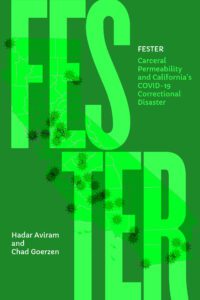
Published by University of California Press in 2024, Fester has been recognized for its groundbreaking analysis of the COVID-19 crisis behind bars.
“We wrote Fester to bear witness to the worst prison medical scandal in California history, to give a voice to our most neglected neighbors, and to uplift the effort of a coalition of upstanding citizens that came together to save lives during one of our state’s darkest times,” she said. “Our story is their story, and our book is their book. For us, this award affirms the importance of anchoring advocacy in robust methodology and rigorous data collection, and we hope that this award will help Fester reenergize a conversation about how to ensure that this never happens again.”
While Aviram has written about a range of issues, from animal rights and elder abuse to the death penalty and public trust in the police, it was during the pandemic that her research became increasingly concerned with the correctional system and mass incarceration. COVID-19 exposed longstanding systemic vulnerabilities, including overcrowding, inadequate healthcare, and a lack of public transparency, issues Aviram has long explored in her scholarship.
Aviram’s role in shaping the project was multifaceted. Drawing on the framework of carceral geography, which explores how spaces of incarceration shape—and are shaped by—social, political, and geographic boundaries, she brought a distinctive lens to understanding the spread and impact of COVID-19 within and beyond correctional facilities. At the same time, she opened the project to public dialogue, sharing preliminary findings, policy critiques, and community updates through live engagement with advocates and policymakers on her personal website and blog.
Aviram and her coauthor—her partner of 22 years, research engineer and data scientist Chad Goerzen—wrote Fester while sheltering at home and caring for their then-toddler son, Rio. While Aviram was part of the team that litigated the San Quentin COVID-19 case at the California Court of Appeal and at the California Supreme Court, Goerzen scraped prison and jail data and analyzed their correlations with free-world data about the pandemic.
Aviram’s real-time blogging supported the research effort. Throughout the work, Aviram and Goerzen said they benefited from daily emails and phone calls with formerly and currently incarcerated people and their families, through which they received an inside perspective on the neglect, ineptitude, and cruelty that was taking place in prisons and jails statewide, which deeply informed their work on Fester.
Bridging Scholarship and Social Justice
This approach was built on Aviram’s long-standing tradition of bridging scholarship and public discourse. In an earlier UC Law SF profile and Q&A, she reflected on the importance of ensuring her research informs real-world conversations about justice and reform. This philosophy guided her work on Fester, which stands as both an academic achievement and a work of accountability and advocacy, bringing scholarly rigor to urgent issues while amplifying the voices of those most affected by the carceral system.
Since its establishment in 1992, the award has recognized works that have shaped scholarly understanding of crime and justice, spotlighting research with enduring impact.
Past recipients include some of the most influential voices in criminal justice scholarship—works that continue to shape policy debates and academic discourse worldwide. For Aviram, joining this cohort underscores the impact of work at the intersection of law, policy, and lived experience.