Master of Legal Studies program helps government workers think like lawyers
- UC Law SF partners with local governments to offer tuition discounts to public-sector employees pursuing a Master of Legal Studies degree.
- Students can move through the program at their own pace, choose between in-person and online classes, and focus their studies on specific areas of law.
- Government workers across fields such as public safety, HR, and utilities describe a deeper understanding of legal issues, sharper decision-making, and stronger collaboration with legal teams.
UC Law San Francisco is expanding access to legal education for public-sector employees, offering tuition discounts through partnerships with local government agencies to help workers sharpen their skills and better serve their communities.
Employees of partners including the City and County of San Francisco, San Mateo County, and Bay Area Rapid Transit (BART) can enroll in the College’s Master of Legal Studies (MLS) program at a reduced cost. The program is designed for professionals whose work intersects with law and policy but who don’t need to become licensed attorneys.
For Brandon Kang, a budget and finance analyst at the San Francisco Public Utilities Commission (SFPUC), the program has provided practical tools he can use immediately.
Kang enrolled to better understand the legal frameworks behind budgeting, contracting, and regulatory compliance. A course on state and federal environmental law has helped him guide the infrastructure projects his agency manages.
“The course gave me a much clearer picture of how environmental law intersects with the work we do,” Kang said.
That clarity has translated into day-to-day improvements. Kang said he now feels more confident navigating statutes and regulations, spotting potential issues earlier, and working more effectively with legal teams.
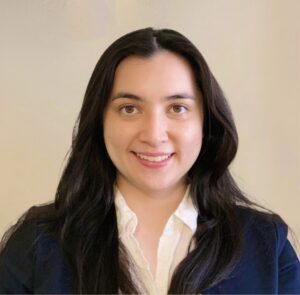
After completing the MLS program, Stephanie Coombes can confidently interpret legal sources, analyze contracts, and navigate workplace issues with greater precision in her work as an HR professional.
“I can make better-informed recommendations,” he said. “That ultimately translates to more responsible stewardship of public resources.”
The program’s flexible structure has also been key. Students can complete the degree in one to four years, choosing between in-person and online classes while tailoring coursework to areas such as employment, tax, or criminal law.
Kang is one of a growing number of government employees taking advantage of these partnerships. Participants come from a wide range of roles, including public safety, utilities, information technology, human resources, and the courts.
“We are proud to partner with local government entities to expand access to our programs,” said UC Law SF Dean of Enrollment Management Dean June Sakamoto. “These collaborations support the professional growth of people who deliver essential public services.”
For Stephanie Coombes, a human resources professional with San Mateo County, the program has given her a stronger handle on the employment and labor law issues that arise in her work.
In a contract drafting and analysis course, she learned to identify key provisions in agreements. A negotiation class has helped her advocate more effectively — a skill that she uses in both her professional and personal life.
But the biggest advantage, she said, has been learning how to approach legal questions with a more analytical mindset.
“I can look up statutes and regulations that pertain to my work and understand them,” Coombes said. “And if something is unclear, I now possess the skills to find reliable sources that help explain it.”
Coombes, who graduates from the program this May, added that tuition support made pursuing the degree more feasible.
“I am really grateful for the tuition discount I received as a San Mateo County employee,” she said.
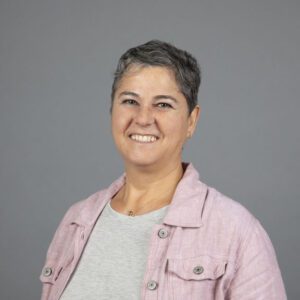
Ani Baghdassarian ’22 uses the legal training she gained in the MLS program to review workplace policies more critically, flag potential issues earlier, and provide clear guidance to her team.
Ani Baghdassarian, an operations manager with the SFPUC who earned her legal master’s degree in 2022, said the classroom experience stood out as much as the curriculum.
Unlike many programs that separate students by degree type, UC Law SF allows MLS students to learn alongside JD candidates and internationally trained lawyers pursuing LLM degrees. Baghdassarian said that mix of perspectives enriched discussions and broadened her understanding of how legal concepts apply across industries.
“It made the learning environment dynamic and engaging,” she said.
Focusing on employment law, Baghdassarian said the program strengthened her ability to interpret policies, analyze legal questions, and provide advice on workplace issues.
“It has made me more effective in supporting fair, consistent, and informed decision making within my group,” she said.
Program leaders say that kind of impact is precisely the goal of the program.
“A Master of Legal Studies helps government employees stand out, especially in roles that deal with regulation, law, or policy,” said Jessica Vapnek, outgoing associate dean of the MLS program.
Morgan Wells, incoming associate dean of the program, added: “It empowers public servants and other professionals with the skills to communicate clearly about legal issues and work effectively with lawyers — without needing to become one.”