UC Law SF’s Startup Legal Garage Partners with 18 Startups Driving Innovation in Health, Energy, and AI
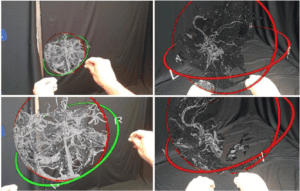
HoloStroke’s 3D holographic brain imaging technology enables doctors to quickly understand what’s happening inside a patient’s brain during and after a stroke—speeding diagnosis and improving outcomes. HoloStroke-CTA by InsightVue, Inc. is among 18 companies partnering with UC Law SF’s award-winning Startup Legal Garage this fall.
- UC Law SF’s Startup Legal Garage welcomes 18 startups this fall focused on health, clean energy, AI innovation, and more.
- The program pairs law students with attorney mentors from top law firms to provide high-quality, no-cost legal support to early-stage companies.
- Over 15 years, the program has supported hundreds of startups and earned national recognition for its real-world impact.
Developing new treatments for chronic diseases. Revolutionizing clean energy. Improving maternal health care. These are just a few of the bold ideas driving the latest group of startups partnering with UC Law San Francisco’s Startup Legal Garage this fall.
Founded in 2009, the award-winning program pairs law students with early-stage companies tackling some of the world’s toughest challenges. Students gain hands-on experience under the guidance of top intellectual property and corporate attorneys, while startups receive free, high-quality legal support to help navigate key stages of growth.
“This program is a win-win for law students and startups,” said Paul Belonick, faculty assistant director of UC Law SF’s Center for Innovation, which oversees the program. “It’s extremely rewarding to see how much students learn and grow in confidence through this work—and we consistently hear from entrepreneurs how valuable this experience is for their companies.”
This fall marks the 23rd Startup Legal Garage cohort, featuring 18 startups working at the cutting edge of science, technology, and social impact. They include:
- Endios Bio – Turning new scientific discoveries into potential treatments for ALS
- Hakimu – Using AI to make Africa’s laws and court rulings more accessible and understandable
- HoloStroke-CTA by InsightVue, Inc. – Employing holograms to help doctors more precisely diagnose stroke complications
- IMPERSONAS – An avatar management platform for virtual appearances and brand deals
- Lagomics – Harnessing AI to design protein sequences for next-generation medical treatments
- Materium Technologies – Developing stronger, sustainable coatings for electronics, vehicle parts, medical devices, and other products
- Medivations Technologies – Making dialysis care safer, faster, and more affordable
- OdisAI – Reducing paperwork and burnout for veterinarians through AI-driven tools
- Omnipath H2 – Cutting the cost of transporting clean hydrogen for industrial use
- Penguin Health – Helping Medicaid mental health providers save time and focus on patient care
- Stork Labs Medical – Improving labor and delivery outcomes for mothers and babies
- Stealth-mode companies – Several early-stage startups not yet ready to reveal their innovations
Over the past 15 years, the Startup Legal Garage has supported hundreds of emerging companies, earned national recognition from the American Bar Association, and collaborated with groundbreaking ventures. These include Caribou Biosciences, co-founded by Nobel laureate Jennifer Doudna, whose CRISPR-Cas9 discovery transformed modern medicine.
Among the many founders who’ve benefited from the program is Pinkey Patel, CEO of Myri Health, who described the legal support as invaluable.
“Services like these are often cost-prohibitive for early-stage companies, yet they’re critical during the most formative stages of building,” Patel said. “The value we received—both in legal insight and in the professionalism of the students—was immeasurable. Programs like this aren’t just helpful; they’re game changing.”
Students also gain deeply from the experience. Kyle Geffon ’26, who participated in Fall 2024, worked with two early-stage biotech and AI startups on everything from company formation and Series A fundraising to third-party contracts and litigation.
“I learn so much from the founders we work with, and it is rewarding to be able to reciprocate that with my legal knowledge,” he said. “Both of the startups I was paired with are great companies working to provide solutions to everyday problems people deal with.”