Strong Ties to Japan Prepare UC Law SF Alumni to Lead on the Global Stage
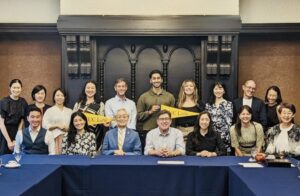
Graduates of UC Law SF’s JD and LLM programs practicing in Japan met with administrators in Tokyo for a Fall 2024 luncheon, showcasing how the College’s programs and global partnerships prepare lawyers to navigate complex legal systems and succeed abroad.
- UC Law SF prepares students for global legal careers, helping alumni lead high-stakes, cross-border transactions in Japan and beyond.
- Specialized courses, faculty mentorship, and study-abroad opportunities open doors to international law practice.
- Partnerships with Japanese law schools and programs for foreign attorneys strengthen U.S.–Japan legal exchange.
From alumni guiding multimillion-dollar deals in Tokyo, to judges studying legal technology on campus, UC Law San Francisco has become a major hub for U.S.–Japan legal exchange.
Beyond preparing law students for international practice, its programs produce the lawyers, judges, and expertise that influence global trade, shape multiple legal systems, and elevate San Francisco’s status as a Pacific economic and cultural power.
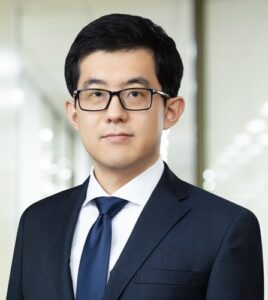
Daigo Takahashi ’14 has pursued law in Tokyo, where he launched his legal career handling major cross-border business deals for global clients. His inspiration for the bold move came from a UC Law SF seminar.
Daigo Takahashi ’14 didn’t expect to start his legal career working on high-stakes, cross-border transactions for a leading global law firm in Tokyo. But one semester at UC Law San Francisco changed his trajectory. In a seminar on Japanese Legal Systems, a guest lecturer spoke about life as an American lawyer in Tokyo.
“That guest speaker session opened the door to me,” Takahashi recalled. “I learned that it was possible to practice in Japan as a lawyer admitted in the U.S.”
With encouragement from professors, he secured a 2L summer position in Morrison Foerster’s Tokyo office. After graduating in 2014, he spent the next seven years working there, helping to close multimillion-dollar transactions, including mergers and acquisitions, joint ventures and strategic investments, for Japanese and multinational businesses.
“It was very fulfilling to work with people from all over the world, executing deals that bridge cultural gaps and differences,” he said.
Takahashi is one of many UC Law San Francisco graduates who have built successful legal careers in Japan. Alumni credit the school’s specialized curriculum, study-abroad opportunities, faculty mentors, and strong partnerships with Japanese law schools with giving them an advantage in their professional endeavors.
Faculty Mentorship That Opens Doors
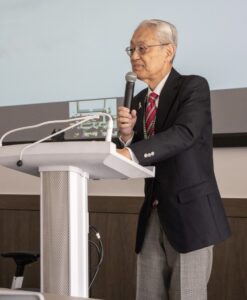
Professor Setsuo Miyazawa speaks at UC Law SF’s 2023 Japanese Law Symposium, an annual event he organizes to foster U.S.–Japan legal exchange.
UC Law SF’s more recent ties to Japan have been profoundly shaped by Professor Setsuo Miyazawa, now senior director emeritus of the Center for East Asian Legal Studies (CEALS). For 15 years, he taught the Japanese Legal Systems seminar—the same class that sparked Takahashi’s interest in working abroad.
“It’s important to produce lawyers in both countries who understand each other’s legal systems,” said Miyazawa. “Law schools like UC Law SF play a vital role in strengthening U.S.–Japan legal relations.”
Miyazawa has mentored dozens of students and connected them with attorneys and firms in Tokyo, helping shape the careers of alumni like Kan Morimoto Lew ’21.
Lew had planned to build his legal career in the U.S., but attending UC Law SF’s Japanese Law Symposium—an annual event where experts discuss pressing legal issues—altered his path.
After the event, Lew introduced himself to Miyazawa, who organizes the symposium. The professor encouraged him to apply for an internship with a Tokyo-based law firm. With Miyazawa’s support, Lew secured a summer position at Oh-Ebashi LPC & Partners, working on cross-border business transactions, primarily representing Japanese businesses investing overseas.
“Working in Tokyo for three months, that’s when I first started seriously thinking about practicing law abroad,” he said.
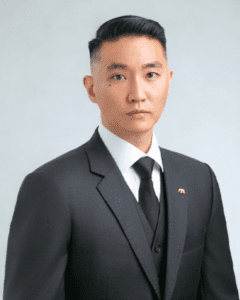
Kan Morimoto Lew ’21 landed a Tokyo internship that sparked his interest in practicing abroad, following encouragement and advice from Professor Setsuo Miyazawa. Lew now advises clients on mergers, acquisitions, and international energy projects at K&L Gates in Tokyo.
Now an associate at K&L Gates’ Tokyo office, Lew most recently represented a large public utility client as a member of its in-house legal team in renewable energy deals with foreign investors and project finance deals building energy infrastructure throughout Southeast Asia. Returning to his home office, Lew now advises corporate clients on mergers and acquisitions, reorganizations, employment, and other legal matters across a variety of industries.
“I think cross-border deals make me a better lawyer because there’s more to consider,” he said. “While you could stay your whole career in the United States because of the size of that market, the world is only getting smaller, and it’s important to understand how companies do business abroad.”
Lew credits UC Law SF programs like the Startup Legal Garage, Corporate Externship, and negotiations class with preparing him for international practice. He also cites support from the Career Development Office and an independent study with Miyazawa, in which he interviewed attorneys for a research paper that explored opportunities for foreign lawyers in Japan.
Preparing Lawyers for Global Practice
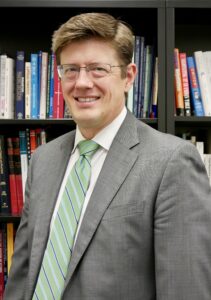
Professor Keith Hand, who leads the Center for East Asian Legal Studies (CEALS), explains how San Francisco’s role as a global business gateway with strong East Asian ties helps UC Law SF prepare graduates to excel in international practice.
UC Law SF is one of the few U.S. law schools with a dedicated Center for East Asian Legal Studies. The center offers regular courses on Japanese and Chinese legal systems and brings leading scholars and practitioners to campus.
CEALS Director Keith Hand says UC Law SF’s location makes it a natural hub for Pacific Rim legal exchange.
“San Francisco has deep historic ties with East Asia, is a major business center, and attracts scholars and practitioners from around the world,” Hand said. “Many law firms here work with clients in the region, so understanding these legal systems is a real advantage for our graduates.”
The impact for graduates is far reaching. UC Law SF alumni now shape deals and business plans that affect the world’s largest economies—advising on renewable energy, mergers and acquisitions, intellectual property, and international disputes that ripple far beyond Japan.
Take Hitomi Ozaki ’23, now practicing corporate law at Nishimura & Asahi, Japan’s largest law firm. She says UC Law SF’s specialized courses—like International Business Transactions, taught by Hand—prepared her to advise clients on high-stakes deals.
“To know what transactions trigger U.S. government review, that’s very helpful in my practice area,” she explained.
At Nishimura & Asahi, she works on mergers, acquisitions, and cross-border transactions that influence both Japanese and international markets.
“I like building bridges between counterparties and helping transactions move forward,” she said.
Partnering with Japanese Law Schools
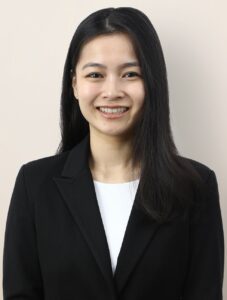
Drawing on skills from UC Law SF’s specialized curriculum, Hitomi Ozaki ’23 now counsels global companies on high-stakes corporate deals at Nishimura & Asahi, Japan’s largest law firm.
UC Law SF partners with more than 30 law schools worldwide, including Waseda University and Hitotsubashi University in Tokyo. These partnerships allow UC Law SF students to study Japanese law, business law, and dispute resolution in Tokyo while immersing themselves in the culture and legal system.
Alexander Winding ’20 described his semester at Waseda Law School as transformative.
“It was an incredible experience,” he said. “I got to learn about Japan’s legal system and visit institutions like the Diet, Japan’s congress, and the courthouse to watch trials.”
Back in San Francisco, he shared his ambition to practice law in Japan with Professor Jessica Vapnek, director of UC Law SF’s International Development Law Center. She encouraged him to research the legal market and work on connecting with attorneys in Japan.
“She told me if this is something you want to do, there’s definitely a path for you,” he recalled.
Through hard work and perseverance, Winding landed a job in 2022 at Nishimura & Asahi—the same firm where Ozaki now works. He now handles financing for major projects in energy production, ship and aircraft building, real estate, and more.
“A lot of my work involves renewable or clean energy,” he said. “It feels rewarding to know that my work can have a positive impact on the world.”
Expanding Knowledge of Japanese Law and Business Culture
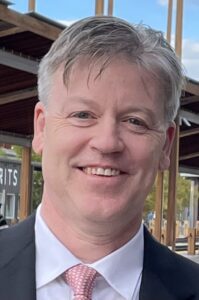
Professor David Makman, who lived and worked in Japan for five years, now leads UC Law SF’s Japanese Legal Systems seminar, teaching students to recognize the cultural and legal nuances that shape international business transactions.
Even after his retirement from teaching in 2023, Miyazawa continues to shape UC Law SF’s role as a bridge between U.S. and Japanese legal communities.
He arranges regular meetups between study-abroad students and alumni in Tokyo. He also continues to organize the school’s annual Japanese Law Symposium, bringing together experts from the U.S. and Japan to tackle cutting-edge legal issues.
At the 2024 symposium, David Albagli ’07, a partner at White & Case in Tokyo, discussed how artificial intelligence is reshaping intellectual property rights worldwide. He described how efforts to patent AI-generated inventions have been rejected by every major jurisdiction.
“You can’t have just a machine as the inventor,” Albagli explained. “A person who makes a substantial contribution to an invention (conception) should be deemed an inventor, but it’s uncertain how the law will handle hard cases—where the line between the contribution by an AI system and a person is unclear.”
The Japanese Legal Systems seminar Miyazawa taught traces the evolution of Japanese law from the 1600s to today. Now led by Professor David Makman—who lived and worked in Japan for half a decade—the course dives into the cultural and structural differences that help students navigate cross-border transactions with flexibility and insight.
“The things I talk about are not what you normally get in a law school class, but without them, it’s hard to do international business,” Makman said.
This emphasis on practical, cross-cultural understanding has helped UC Law SF graduates influence business transactions that ripple through two of the world’s largest economies.
An Educational Resource for International Lawyers
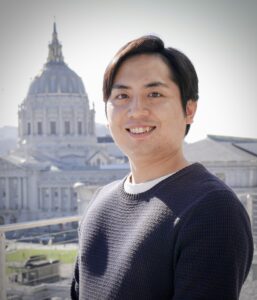
Learning from attorneys at leading global tech companies, Judge Noriyuki Issha deepened his knowledge of AI, technology, and intellectual property law at UC Law SF—expertise he now applies to his work as a judge in Japan.
UC Law SF also draws international professionals, including Japanese judges, to its Master of Laws (LLM) program for foreign attorneys. The College partners not only with law schools but also with bar associations in Tokyo, which send attorneys to learn about the U.S. legal system in San Francisco.
Judge Noriyuki Issha, who has presided over a wide range of civil and criminal cases in Japan, pursued his LLM degree in 2024–25. He focused his studies on science, technology, and intellectual property—one of eight specializations offered to LLM students.
“My mission was to expose myself to a new area, especially technology of law,” he said.
At UC Law SF, he explored how legal technology could expand access to justice in Japan. One of his favorite courses was AI Law co-taught by Ernest Hammond, who serves as associate general counsel of AI product at Meta.
“Hearing directly from counsel at a major tech company was invaluable,” he said.
Judge Momoko Miyazaki, who earned her LLM in 2014 focusing on health law, said the program’s size, diversity, and San Francisco location made it especially appealing.
“It broadened my horizons and deepened my understanding of the law,” she said. “Living and learning abroad gave me experience I draw upon when presiding over international disputes.”
Chancellor & Dean David Faigman says these partnerships and programs demonstrate UC Law SF’s worldwide influence.
“Our deep ties with Japan—through specialized curriculum, partnerships with Japanese legal institutions, and a growing alumni network—give our students unmatched opportunities to learn, connect, and lead on a global stage,” he said. “These initiatives strengthen legal education and underscore UC Law San Francisco’s place among the world’s preeminent law schools.”