Morris Ratner to conclude decade-long tenure as UC Law SF provost & academic dean
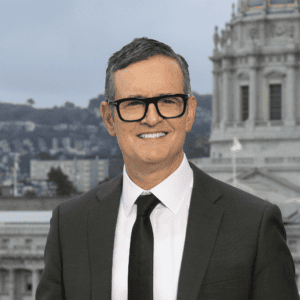
Morris Ratner has served as UC Law SF provost & academic dean since 2017.
- Bar passage rates and graduate employment outcomes improved significantly under Provost Ratner’s tenure following data-driven academic reforms.
- He led efforts to expand academic support and integrate skills training across the law school curriculum.
- His leadership positioned the College to adapt to changes in legal education, including bar exam reform and use of AI.
After nearly a decade as provost & academic dean, Morris Ratner will leave the role at the end of 2026, capping off a tenure widely seen as transformative for UC Law San Francisco and marked by stronger student outcomes and forward-looking curriculum changes.
Colleagues describe Ratner as a highly effective leader who pairs intellectual rigor and strategic vision with integrity and a collaborative approach to help drive broad institutional change.
“Provost & Academic Dean Morris Ratner has been instrumental in transforming UC Law San Francisco,” said Chancellor & Dean David Faigman. “Our success throughout the curriculum, from the day-to-day classroom experience of our students to our graduates’ success on the bar exam and in employment, is attributable to Morris’ extraordinary artistry as an administrator.”
Ratner, who joined the faculty in 2012 after a successful career as a litigator, said he drew on decades of experience as a lawyer, teacher, scholar, and manager of complex projects, including multibillion-dollar class actions — all of which he brought to the role.
“Over the past decade I’ve been able to weave those skills and experiences together in service of a community and mission that have filled my daily work life with meaning,” he said.
A defining achievement of his tenure is helping reverse a decades-long decline in bar exam performance. When he assumed the role in 2017, the College had just recorded a record-low bar pass rate of 51%. Working with faculty and staff, he led a data-driven effort to identify the causes and implement reforms, including adding bar exam prep courses and ensuring that legal analysis and exam-taking skills instruction are embedded into the core curriculum. The impact is clear. Since 2019, bar pass rates have ranked among the strongest in the school’s recent history, reaching 86% in 2025.
“That is due to Dean Ratner’s leadership and commitment to ensuring that students graduate with the skills, knowledge, and support needed to pass the bar exam,” said Director of Bar Passage Support Margaret Greer ’15, who has worked with Ratner on those efforts for the last decade.
Ratner documented that work as lead author of the scholarly article “Determinants of Success on the Bar Exam: One Law School’s Experience 2010-2023,” providing a framework for other law schools seeking to improve student outcomes.
Graduate employment outcomes tell a similar story. The share of alumni employed within 10 months of graduation climbed from 81% to 96% during his tenure. Colleagues point to the evidence-based reforms that Ratner championed.
“He convinced veteran faculty to rethink how to more explicitly teach analytical skills and provide meaningful formative feedback … changing the overall teaching culture such that our student-centered approach is now fully integrated into all aspects of the curriculum,” said Associate Dean for Teaching Jennifer Freeland ’14.
Freeland oversees the Office for Academic Skills Instruction and Support (OASIS), which, along with Bar Passage Support, is one of several new departments or programs launched under Ratner to expand support for students and recent graduates.
Ratner also helped guide the College through the COVID-19 pandemic, earning high praise from faculty for his leadership during one of the most disruptive periods in the institution’s history. A faculty resolution described him as essential to sustaining academic operations through the crisis, commending his “creativity, intelligence, and good sense” under extraordinary circumstances.
He also played a central role in strengthening grants infrastructure through a new Office of Sponsored Projects, expanding programmatic and research centers, advancing faculty scholarship, championing the Legal Education Opportunity Program and the new First Generation Program, and helping revitalize the College’s non-JD degree programs.
“Morris performed the most difficult job at UC Law SF with grace and civility,” said Chief Financial Officer David Seward. “His contribution to the college’s institutional excellence will be long remembered.”
In recent years, Ratner has helped position the law school to meet emerging challenges. He has worked with colleagues to prepare for a new California bar exam expected in 2028 and to expand the College’s AI and technology law curriculum, helping ensure graduates are prepared for a rapidly changing practice environment.
Ratner emphasizes that the work has been collaborative.
“I didn’t do anything on my own,” he said. “The College benefits from a supremely dedicated and competent population of teachers, administrators, and other staff.”
He also acknowledges his husband, Christopher Dydyk, for supporting him as he shifted into the demanding role and for contributing to the campus community by donating his artwork, which is displayed on the walls of three campus buildings.
After vacating the position, Ratner plans to take a working sabbatical before returning to teach and conduct research at UC Law SF. He also intends to support his successor, soon-to-be Interim Provost & Academic Dean Manoj Viswanathan, and continue assisting with special projects.
“I’m excited about the College’s future,” Ratner said. “I think we’re well positioned to continue helping students succeed by designing an educational experience that meets their changing needs.”
Read full statements by colleagues reflecting on Ratner’s legacy here.