The Master Mediator Training
The Master Mediator Training: Advanced Issues, Cross-Cultural Fluency and the Human Element
July 22-24, 2026
Lead Instructor: Dr. Sukhsimranjit Singh, Ph.D, LL.M, LLB, BA.
Guest Instructors: Day 1: Daniel Weinstein, Day 2: Deep Basraon, and Day 3: Bruce Edwards
Program Vision
Most mediation training focuses on the “rational” process of deal-making. However, true mastery recognizes that mediation has an emotional and psychological architecture. In the age of Artificial Intelligence, this training dives deeper into what makes the mediation process human. This course is designed for the practitioner who feels “stuck” in traditional distributive bargaining and seeks tools to effectively handle complex, high-stakes, and polarized disputes.
By blending Dr. Sukhsimranjit Singh’s “Heart from East and Mind from West” philosophy with neuroscience, cross-cultural decision making and behavioral economics, participants will learn to navigate the hidden ego and power dynamics that define the modern mediation table.
3-Day Curriculum: From Stalemate to Closure
Day 1: The Anatomy of a Stalemate
Focus: The Psychology of the Table
- The Human Element: Moving beyond legal positions to identify the hidden interests and human/emotional triggers that keep parties stuck.
- Neurobiology & Technology: How the changing landscape of remote mediation and brain chemistry affects the “changing mediation table.”
- Convening & Negotiating as a Strategy: Lessons from experts on pre-mediation communication, and negotiation frameworks to setting the stage for success.
- Lesson 1 & 4: Unity in Uncertainty – Bridging the gap in polarized spaces and building a foundation for “conscious competence.”
Day 2: The Cross-Cultural Key
Focus: Power Dynamics & Advanced Negotiation
- The Mediation Triangle: Navigating the intersections of Identity, Ego, and Power to become cross-culturally fluent.
- Leading Through the Fire: (Elimination of Bias Credit) Deep dive into the impact of culture, personality & gender on communication and business decision making.
- Negotiation Mastery: With lessons from Cross-Cultural blunders, experience and ancient wisdom to break through traditional negotiation blocks.
- Lesson 2 & 3: Navigating high-pressure rooms when traditional techniques fail.
Day 3: Perspective Shifting & Closure
Focus: Ethical Moments & Durable Agreements
- Impasse-Breaking Techniques: Practical, theoretical, and philosophical underpinnings for overcoming “terminal” deadlock.
- Ethical Moments: (Ethics Credit) Navigating the gray areas of multi-party disputes and “number” negotiations.
- Perspective Closure: Learning how to reach a perspective shift to arrive at a number
- The Global Community: Thinking beyond individual practice to the role of the mediator in an evolving global society.
Learning Outcomes & Competency Alignment
- Professional Lawyering Skills: Mastery of advanced “process architecture” and pre, during and post mediation strategy.
- Global Understanding: Proficiency in cross-cultural fluency and cross-border conflict nuances.
- Reflective Practice: Utilization of journaling and expert & ancient wisdom to develop an individual, fluid mediation style.
Additional Requirements for Participants
- Required Prep: Participants are expected to have completed a basic (40-hour) mediation training.
- Readings: Excerpts from Robert Cialdini (Influence) and Dan Ariely (Predictably Irrational).
- Assessment: Daily reflective journaling required.
Materials: Digital course access to all participants provided in advance of the training
MCLE Credits: Approximately 18 hours of California MCLE. Exact hours TBA.
Dates: Wednesday, July 22 to Friday, July 24, 2026
Time: 8:30am – 5:00pm
Location: In-person on the UC Law SF Campus at 198 McAllister Street, 2nd Floor, Room 213, San Francisco, CA 94102 (in-person only)
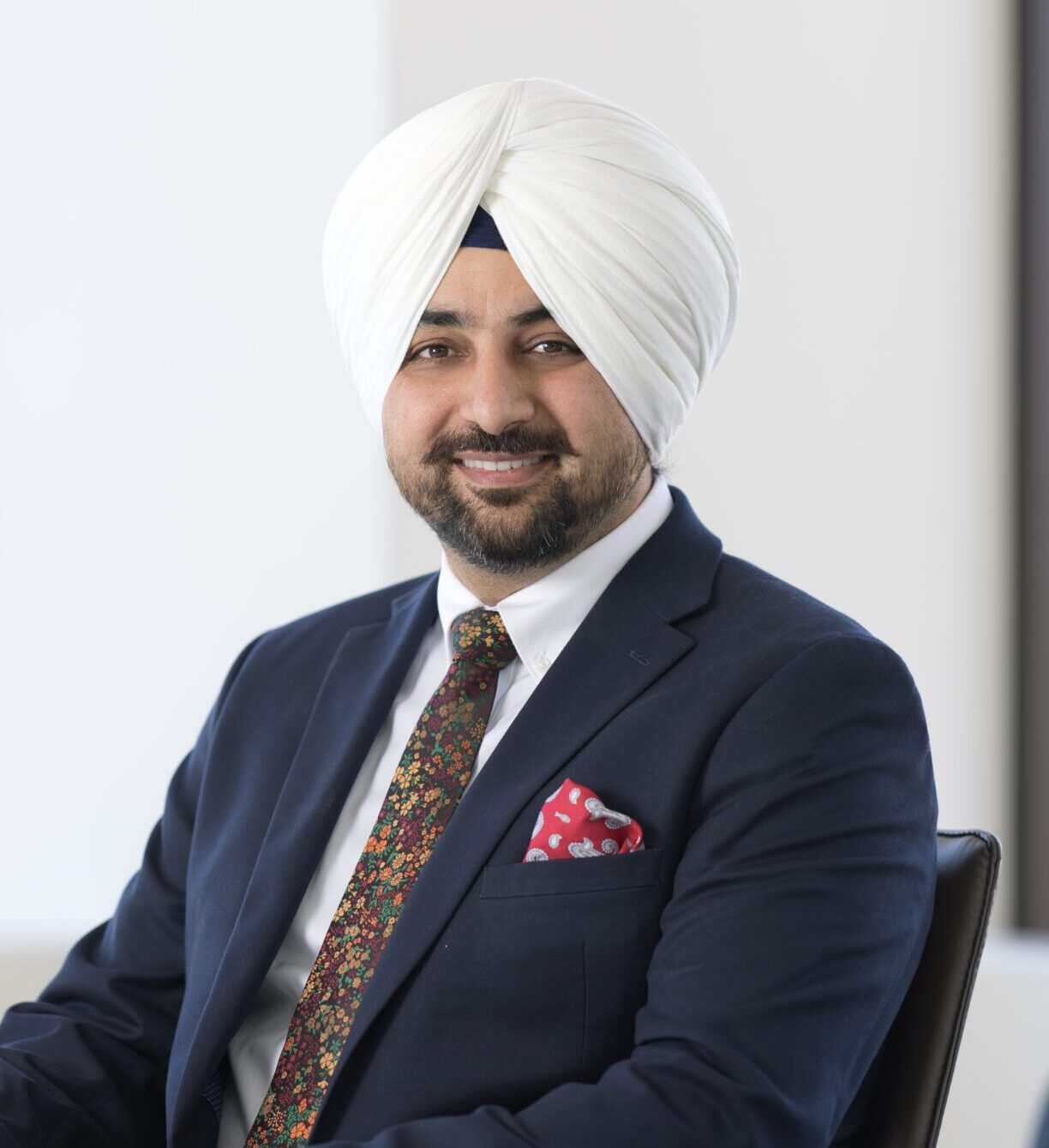 Lead Instructor: Dr. Sukhsimranjit Singh, Ph.D, LL.M, LLB, BA
Sukhsimranjit Singh is a globally recognized conflict resolution expert, author, and professor. A mediator and arbitrator with JAMS, he also serves on the board of the Weinstein International Foundation.
Dr. Singh is an internationally sought-after speaker, having delivered keynotes in over two dozen countries and designed executive education programs across India, Brazil, the United States, Japan, France, Austria, and China. He has trained more than 7,000 professionals worldwide, including members of the judiciary, with a focus on cross-cultural dispute resolution. His practice spans negotiation, mediation, and complex cross-border and faith-based conflicts, covering employment, commercial, public policy, labor, and international disputes across multiple jurisdictions.
A recipient of the Peacemaker Award from the Southern California Mediation Association and honors from Brazil’s judiciary and the Government of India, Dr. Singh is the author of Cross-Cultural Intelligence: Tools and Wisdom for Leaders, Decision Makers, and Problem Solvers (2026). He is also the founder of Singh Academy, advancing cultural understanding and practical conflict resolution skills globally.
Before joining JAMS, he taught at Pepperdine University, University of Southern California, Willamette University, and Hamline University, and clerked with the Chief Justice of India. He holds honorary professorships in India and continues to teach and contribute globally.
Cancellation Policy
For all CNDR events, cancellations on or before 30 days prior to the event will receive a full refund, minus an administrative fee of 7% of ticket price. Cancellations after 30 days prior to the event will receive a 50% refund. Cancellations on or after 5 days prior to the event will not receive a refund.
ADA Accommodations Statement
UC Law San Francisco is committed to making its facilities and events accessible in compliance with the Americans with Disabilities Act. If you need reasonable accommodations, please contact CNDR at 415-581-8941 or CNDR@uclawsf.edu, or the Disability Access Hotline at 415-581-4848 or DAH@uclawsf.edu at least two weeks before the event.
Use of Materials Notice
The UC Law SF Center for Negotiation and Dispute Resolution (CNDR) hereby irrevocably grants registrants/participants a limited, nonexclusive, non-transferable, royalty-free right and license to use materials provided and distributed by CNDR and/or UC Law SF in the course of the training herein for purposes of participation and personal/internal, non-commercial reference purposes.
Code of Conduct
The UC Law SF Center for Negotiation and Dispute Resolution (CNDR) is dedicated to ensuring that its events and gatherings are an inclusive, respectful, productive, and harassment-free experience for everyone, regardless of gender, gender identity and expression, age, sexual orientation, alienage or citizenship status, physical or mental ability, color, physical appearance, body size, race, ethnicity, national origin, marital status or partnership status, pregnancy or lactation status, religion or creed, status as a veteran or active military service member or any other basis protected by U.S. federal, state, or local laws.
When participating in or attending a CNDR event, the following behaviors are expected:
- Be present, timely, open-minded, and participate actively.
- Act with respect and dignity towards everyone you encounter, including participants, staff, instructors, and coaches.
- Be considerate and collegial in your speech and actions, valuing a diversity of views and opinions.
- To support a participatory learning environment for everyone, be mindful of how much time you use (e.g. in discussions or Q&A sessions).
- Behave in accordance with professional standards (such as your employer’s policies, or applicable law).
- Alert on-premises security personnel and staff if you notice a dangerous situation or someone clearly in distress, or call 911 in case of an emergency.
Harassment, bullying, non-consensual physical contact, threats, microaggressions, intimidation, and/or insinuations that are hurtful or interfere with any other attendee’s experience or participation are examples of behaviors which are unacceptable and could be cause for removal from a CNDR event.